

Tri-Cities Airport Master Plan
Planning Today. Building Tomorrow.
The Tri-Cities Airport Master Plan establishes a long-term vision for the future of TRI. Developed in coordination with the Federal Aviation Administration (FAA), the Tennessee Department of Transportation (TDOT), airport stakeholders, and the local community, the Master Plan serves as a strategic roadmap for the airport’s development over the next 20 years.
The plan evaluates existing facilities, forecasts future aviation demand, identifies infrastructure needs, and recommends improvements that will allow Tri-Cities Airport to safely, efficiently, and sustainably serve Northeast Tennessee and Southwest Virginia for decades to come.
About the Airport Master Plan
A Blueprint for the Future of TRI
Airport Master Plans are comprehensive planning documents that guide an airport’s long-term development. They help ensure facilities, infrastructure, and operations can accommodate future growth while continuing to meet FAA design standards and the needs of airlines, general aviation users, airport tenants, businesses, and the traveling public.
The Tri-Cities Airport Master Plan reflects extensive technical analysis, stakeholder collaboration, and public input. While the plan identifies future development opportunities, each recommended project will advance independently based on operational needs, environmental review, FAA approval, and available funding.
Why the Plan Matters
Supporting the Region for Generations to Come
Tri-Cities Airport plays a vital role in connecting Northeast Tennessee and Southwest Virginia to the national air transportation system. As passenger traffic continues to grow and aviation evolves, thoughtful planning helps ensure the airport remains positioned to meet future transportation needs while supporting economic development throughout the region.
The Master Plan provides a flexible roadmap that allows the Airport Authority to make informed decisions about future investments while preserving opportunities for long-term growth.
Downloadable Resources
To help foster a greater understanding of the Airport Master Planning process, our partners at AtkinsRéalis have provided these helpful resources.
Meeting Information
Download information shared at Airport Master Plan meetings.
Master Plan Purpose
The purpose of an Airport Master Plan is to study the airport and provide a 20-year development program that will create a safe, efficient, economical, and environmentally responsible airport facility.
This study ensures the airport can facilitate the demand for aviation services expected, meet the development goals of TRI, and create additional public value for residents in the Tri-Cities area and the aeronautical community at large.
The final product serves as a critical tool for TRI. It depicts the existing airport facilities and planned development initiatives. This document is vital for coordination between the Tri-Cities Airport Authority (TCAA), the Tennessee Department of Transportation (TDOT) and the Federal Aviation Administration (FAA) to ensure capital improvement needs are met.
Master Planning Process
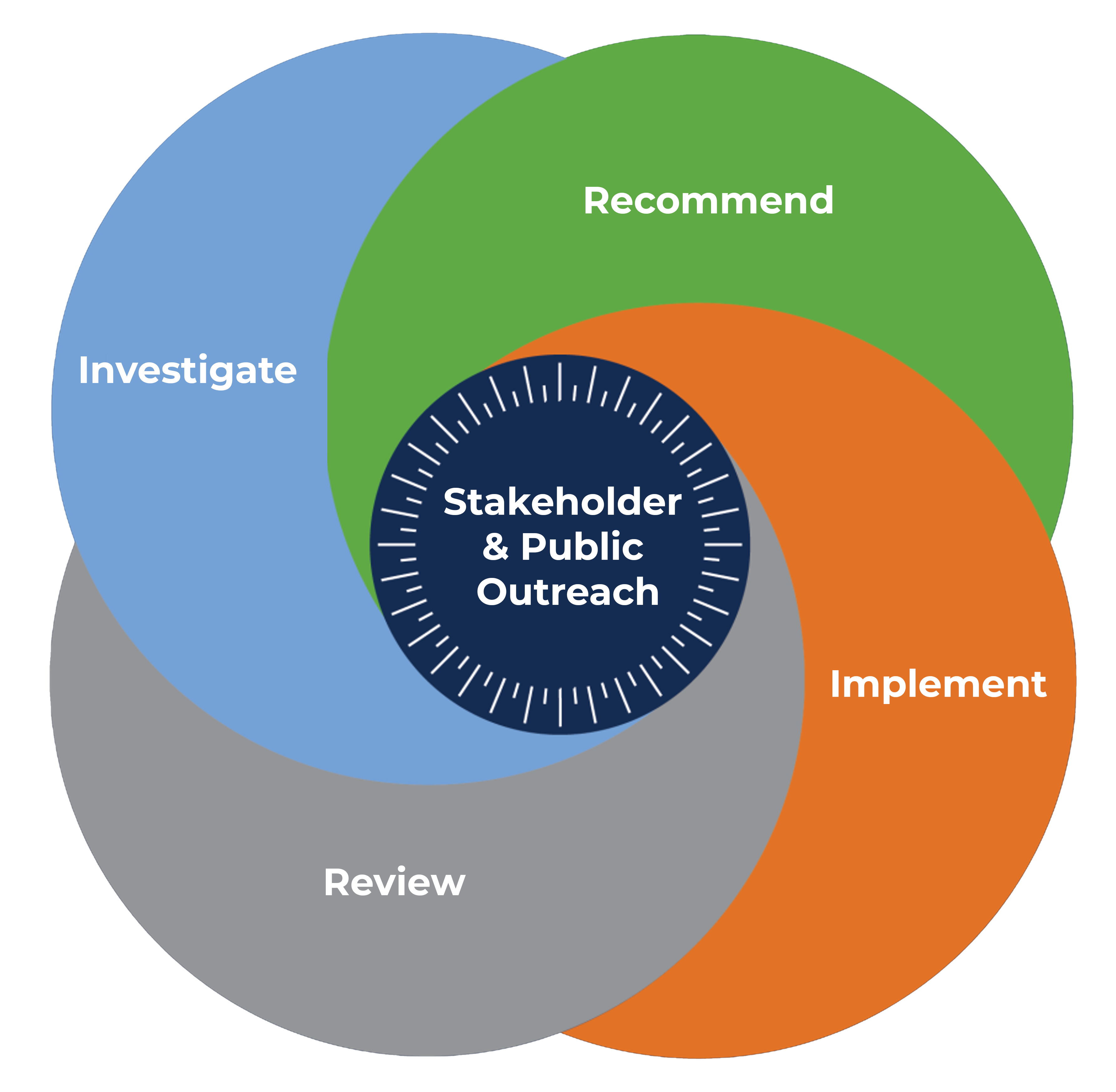
The Master Planning process is a continual process that revolves around four basic elements – Investigation, Recommendation, Implementation, and Review. The Airport Master Plan requires continual input from interested stakeholders and the public in order to gain positive acceptance and ultimate implementation.
Proposed Alternatives
As part of the Master Plan process, a set of three development alternatives were created for the airport.
The primary objective of the development alternatives is to formulate a comprehensive strategy for advancing Tri-Cities Airport. This strategy aims to meet the evolving aviation demands while adhering to the developmental objectives. The three development alternatives were then combined into a preferred alternative that was utilized to shape the rest of the Master Plan.
The following are the developmental objectives that influenced the creation of the preferred alternative:
- Land Management – The preferred alternative should maximize development with compatible land uses that match with airport and community needs.
- Economic – The preferred alternative for airport development should prioritize initiatives and growth that diversify revenue sources and strengthen the airport’s economic stability.
- Airside Facilities – The preferred alternative should provide a proactive plan that will meet future demand throughout the planning period and beyond, as well as increase the number of based aircraft.
- Operational – The preferred alternative should aim to enhance the passenger experience within the terminal, including customer service, safety, security, convenience, and cleanliness, as well as also attract additional airline service.
- Environmental – The preferred alternative should consider the implementation of enhancing energy use including updates to lighting, HVAC systems, building insulation, and other modifications, as well as provide car and aircraft charging facilities and enhance and implement programs to promote sustainability within the community.
- Regional Growth/Development – The preferred alternative should propose development that positively contributes to the local economy and attracts new business, both aeronautical and non-aeronautical, encourage routes and services that can accommodate local business, as well as provide services and facilities that open the door for career and business opportunities for the surrounding community.

Investing in the Future
The Airport Authority has already demonstrated its commitment to long-term planning through significant investments in airport infrastructure, passenger facilities, and airfield improvements. The completed Master Plan builds upon that momentum by identifying future opportunities that will enhance safety, improve the passenger experience, support economic growth, and strengthen regional connectivity.
As projects move from planning to implementation, this page will continue to be updated with major milestones and progress.